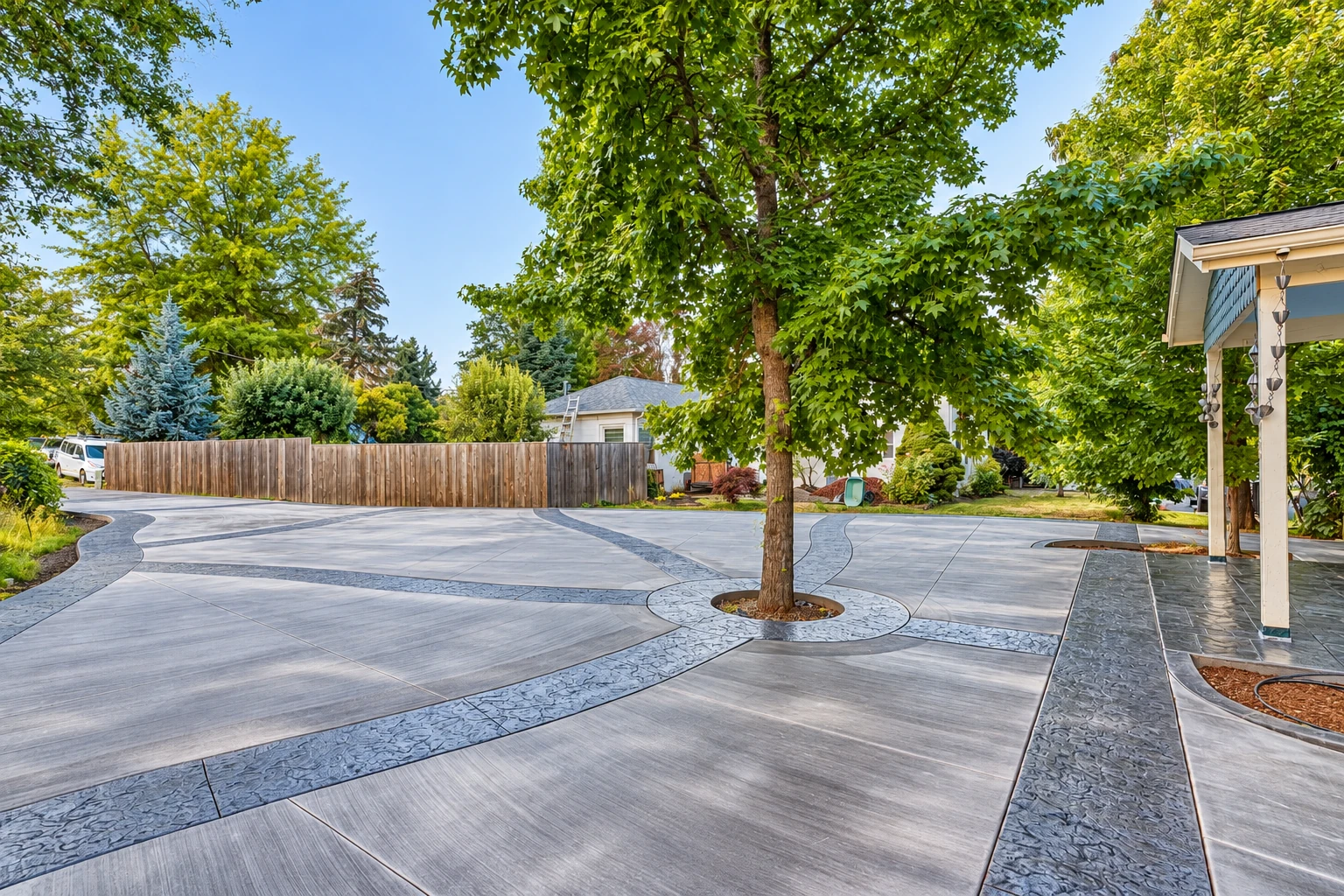
Concrete parking lot building in Boston MA - a lot that drains and holds up to winter
Gravel lot turning to mud, or old pavement pooling water and breaking up? We build a concrete lot that drains and stays solid.
- Licensed and fully insured.
- Free estimates at your property.
- We respond within 1 business day.
Concrete parking lot jobs we take on
New concrete parking areas
A new concrete parking area dug out, packed and poured for daily car traffic. It suits rental buildings, small commercial lots and parking behind a house.
Replacing a worn-out lot
We break out tired asphalt, rutted gravel or cracked concrete, fix whatever made it fail underneath, and pour a new lot that sheds water away from the building.
What goes into building a concrete parking lot in Boston?
Concrete parking lot building in Boston means digging out the old surface and soft soil, packing a firm base and pouring a slab made for cars, with the rainwater sent where the city wants it. On most lots, the drainage and the street entrance shape the job more than the pour does.
Most lots I'm called to are gravel that ruts every spring or old pavement that holds puddles and breaks up at the edges, and the fix starts with working out why. The price moves with the lot's size, how much old pavement and soft soil has to come out, the drainage your site needs and whether you need a new curb cut, the opening in the city curb for your entrance, and the schedule turns mostly on city permits and the weather. If the old slab has to come out in pieces, we handle that with our concrete cutting work too. A concrete lot built for parking, not poured like an oversized patio, can give many years of service with little upkeep, so ask every bidder how they'll build yours for cars. I'll give you the figure for your own lot once I've walked it.
Concrete parking lots, from drainage to joints
I start every lot by asking why the old surface failed, then plan the base, the drainage and the entrance around your ground, because those hidden parts decide how the concrete holds up.
Water and the entrance first
We start with where the rainwater goes and where the lot meets the street, since those two usually shape everything after them.
Digging out and packing
We dig to firm ground and pack the subgrade, what the slab sits on, because that's the last place I'd ever cut costs.
Edges and nearby buildings
We pour concrete footings where edges carry walls or posts, and look at foundation raising if a building beside the lot has sunk.
Pour timing and joints
We pour clear of a hard freeze and cut control joints, shallow grooves that decide where the slab cracks, before it picks its own.
Why Boston owners call Ironset for their lots
I spent years patching steps, walks and slabs on rental buildings around Boston and got hooked on why they kept failing. I started Ironset in 2023 to build concrete that doesn't need that patching, and the awkward jobs, like a slab that keeps cracking, are what we're known for.
The person who quotes it pours it
I come out to look at your lot and write the estimate myself, then work alongside our crew on the forming, pouring and finishing, so what we talked about is what gets built.
Licensed and fully insured on every job
We're licensed and fully insured, which matters on a lot where heavy equipment works close to your building, your neighbors and the street.
Satisfaction guaranteed, explained plainly
Satisfaction guaranteed. I'd rather explain a tricky site in plain words and get it right than hand you a quick number, so call (617) 226-2081 to get started.
What happens when you call about a parking lot in Boston?
A lot has to fit your ground, your street entrance and the season we can pour in, so the plan starts with your site and what's gone wrong on it, not with a standard price.
or call (617) 226-2081
Send us the basics
Call (617) 226-2081 or use the form, and tell us the lot's address, roughly how big it is and where you'd like it to meet the street.
A walk around the site
At the visit I look over the ground and the drainage, and ask what's gone wrong there before, like standing water or pavement that keeps breaking up.
A written quote, then the work
Your quote shows what goes under the concrete as well as what you'll see, and any permits get lined up before our crew forms and pours.
Get a free on-site estimate for your Boston lot and its drainage
Send the lot's address, its rough size and where you'd like the entrance off the street, and we'll reply within one business day. I'll then come out for a free estimate at your property, with no pressure to book.
Parking lot questions from Boston owners
Do I need a permit to build a new parking lot on my property in Boston?
Yes, the city's Inspectional Services Department issues a Use of Premises Permit for new parking areas on your property. If the lot sits within 100 feet of a wetland, the Boston Conservation Commission also has to issue an Order of Conditions. When a job needs permits, we help line them up before work starts and walk you through which office is involved.
Who approves a new driveway entrance from the street in Boston?
Boston's Commissioner of Public Works issues a separate permit to cut a city curb or connect a private driveway to a public way. The city's posted application says to get it before you apply to Inspectional Services for any permit that includes a driveway, and work that takes up sidewalk or street space needs its own Public Works permit. Check the current steps with Public Works before you settle on the entrance.
How much does a concrete parking lot cost in Boston?
The cost comes down to the lot's size, how much old pavement and soft soil comes out, the drainage your ground needs and whether you need a curb cut, so I price each lot after walking it. Keep in mind the Boston Water and Sewer Commission bases its stormwater charge on how much hard surface a property has, so ask them how a new lot changes yours. Call (617) 226-2081 to get the number for your own lot.
When is the best time to pour a concrete parking lot in Boston?
Pour when the fresh concrete won't freeze soon after it's placed. The ready-mix concrete trade group urges caution about outdoor pours in late fall, winter or early spring, when the slab could freeze while it's still soaked, so we pick a pour time that keeps it clear of a hard freeze, and that's the main reason a lot's schedule can shift with the weather.
How do I take care of a new concrete parking lot in its first winter?
Skip deicing salts and chemicals the first winter, then use them in moderate amounts after that, which is what the ready-mix trade group advises for concrete that freezes and thaws. The same group suggests considering a commercial breathable sealer on the surface, so ask us about one when the lot is done.
What is the best way to keep a concrete parking lot from cracking in Boston winters?
Start with the mix and the curing, because for concrete that freezes and thaws hard, the ready-mix trade group advises good quality air-entrained concrete, which carries tiny air bubbles that give freezing water room, and proper curing, the stretch where the slab is kept from drying out too fast while it hardens. Ask every bidder, us included, which mix they'll order and how they'll cure your lot. The base and joints described above decide the rest.
Other concrete work around your lot
Concrete footings
Walls, fences, posts and light poles around a lot need footings set deep enough below frost that they don't shift, lean or crack the new slab.
Explore Concrete footingsFoundation raising
If a building beside your new lot has sunk or tilted, raising and leveling it first keeps fresh concrete from being poured against an edge that's still moving.
Explore Foundation raisingConcrete cutting
Clean saw cuts let us take old slabs out in sections, open a path for drainage lines, or trim pavement back neatly where the new lot begins.
Explore Concrete cutting
Concrete parking lot building and Boston's stormwater rules
In Boston the water decides a lot of the job, because the water and sewer commission requires every construction or rebuilding project to hold stormwater on site, so a set amount of runoff from the hard surface soaks into the ground before it reaches a storm drain. For that review, a registered professional engineer or registered sanitarian tests the soil with borings or test pits, and a lot with more than 2,500 square feet of hard surface also needs drainage calculations. On a large outdoor lot, the commission may also require particle separators, units that catch grit before it reaches the pipes, on new storm drains, and since they usually sit on your property, keeping them clean falls to you. That's why we plan the soak-in area and any separators along with the slab, not after it.
Most lots we build here sit behind rental buildings and small commercial spaces, on tight sites with old fill underneath and an entrance off a busy street, and we see the same ground on jobs in Somerville and Chelsea. We're based in Boston and work across the city and the cities around it, so if yours isn't listed, just ask.